EN
EN
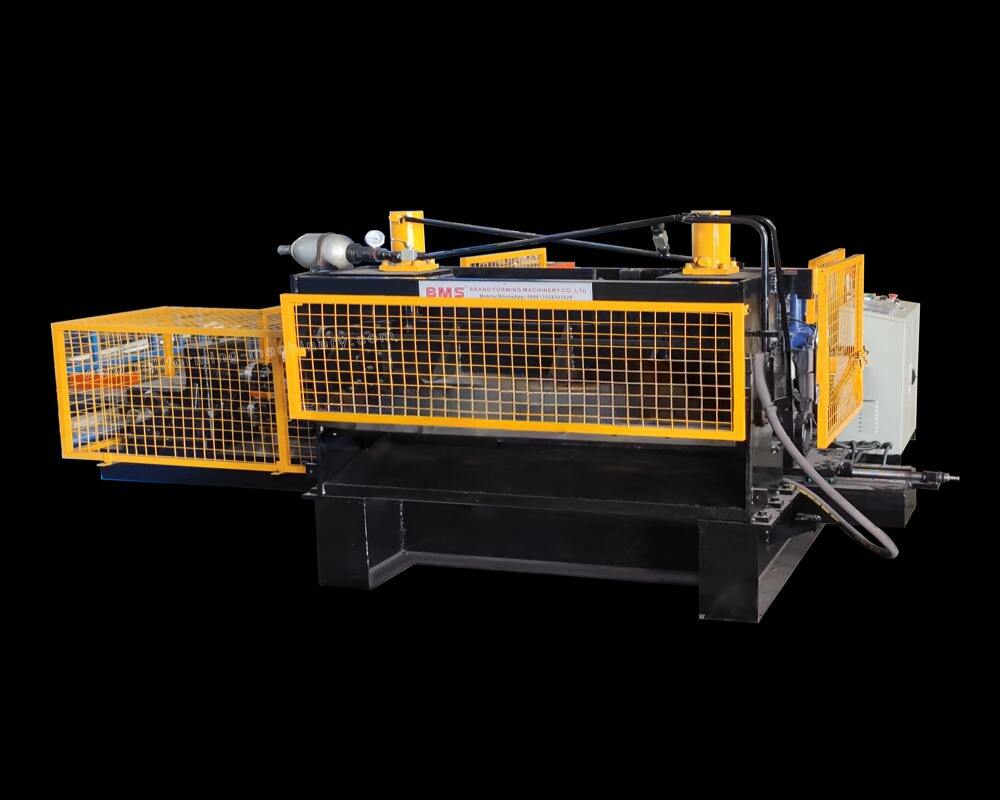
In the evolving architecture and construction industry, the demand for curved metal roofing systems has grown exponentially as designers seek to create more visually striking and functionally superior buildings. The curving board making machine stands at the forefront of this transformation, enabling manufacturers to produce precisely curved standing seam profiles that meet both aesthetic and performance requirements. These specialized machines have redefined what's possible in metal roofing fabrication, combining advanced engineering with practical operational features to deliver unmatched production capabilities for curved panel applications.
Standing seam roofing systems represent the pinnacle of modern metal roofing technology, characterized by their raised interlocking seams that provide superior weather resistance and thermal performance. These systems have become the preferred choice for commercial, institutional, and high-end residential buildings due to their longevity, minimal maintenance requirements, and clean architectural appearance. The transition from straight-panel installations to curved applications has opened new possibilities in architectural design, allowing for stunning visual effects and improved structural performance.
The standing seam profile curving machine addresses the unique challenges of curved panel fabrication through specialized engineering that maintains the integrity of the standing seam configuration while achieving precise curvature. Unlike conventional bending methods that can compromise the structural and weather-tightness characteristics of the profiles, these purpose-built machines ensure consistent curvature while preserving the critical dimensions and functionality of the interlocking seams. This technological advancement has made curved standing seam systems more accessible and reliable, expanding their application across diverse architectural projects from sweeping curvilinear roofs to subtle radius applications.
The semi automatic change type curving machine further enhances this capability through its adaptable design that accommodates different profile configurations with minimal downtime. This flexibility proves particularly valuable in today's construction environment, where projects frequently incorporate multiple curvature requirements and architects demand customized solutions. By enabling efficient transitions between different profile types and curvature specifications, these machines empower manufacturers to respond to diverse project requirements without sacrificing production efficiency or quality consistency.
The engineering sophistication of modern metal roofing curving machine systems lies in their ability to achieve precise, consistent curvature while maintaining the structural integrity of standing seam profiles. These machines incorporate advanced roller guidance systems that gradually form the metal through carefully calculated increments, preventing material stress and surface deformation that can compromise both appearance and performance. The process ensures that the critical standing seam elements – typically configured for 1-inch or 1.5-inch mechanical lock systems – remain fully functional and within specified tolerances throughout the curved panel length.
The semi-automatic changeover capability represents another significant technical advantage, enabling operators to transition between different profile configurations and curvature specifications with remarkable efficiency. Unlike fully manual systems that require extensive adjustments and trial runs, the semi-automatic approach incorporates predefined settings and quick-adjust mechanisms that streamline the changeover process. This operational efficiency translates to reduced setup times and enhanced production flexibility, allowing manufacturers to handle smaller batch sizes and customized orders economically while maintaining competitive production rates.
Material compatibility and processing range further demonstrate the versatility of these advanced curving systems. The equipment accommodates various metal types including galvanized steel, aluminum, copper, and zinc-aluminum alloys, with thickness capabilities typically ranging from 0.5mm to 1.2mm depending on material characteristics. The adjustable radius capability enables production of curvatures from subtle arcs to tight radii, with precision controls ensuring consistent results throughout production runs. This technical versatility makes the curving machine for 1 inch and 1.5 inch standing seam panels an invaluable asset for manufacturers serving diverse architectural markets and project requirements.
The application scope for curved standing seam systems continues to expand across multiple construction sectors, driven by both aesthetic preferences and performance requirements. In commercial architecture, curved metal roofing has become a signature element for landmark buildings including airports, sports facilities, and cultural centers where dramatic visual impact is desired. The metal roof panel curving equipment for complex shapes enables manufacturers to produce the precisely curved components these projects demand, supporting architects' vision while meeting stringent performance standards.
Beyond high-profile commercial applications, curved standing seam systems have gained significant traction in institutional and educational facilities where durability, maintenance efficiency, and aesthetic appeal are equally important. The curved profiles enhance structural performance by efficiently shedding water and snow while providing additional stiffness that contributes to the overall building integrity. The efficient curving board machine for architectural roofing ensures that these benefits can be achieved without compromising production efficiency or economic viability, making curved systems accessible for a broader range of projects including schools, hospitals, and municipal buildings.
The practical benefits extend to installation efficiency and long-term performance, with precisely curved panels fitting together seamlessly and maintaining their weather-tight characteristics throughout the building lifecycle. The consistency achieved through machine-controlled curvature eliminates the variability associated with manual field bending, ensuring that every panel matches the design specifications and interfaces perfectly with adjacent components. This manufacturing precision translates to reduced installation time, minimized on-site adjustments, and enhanced overall system performance that building owners value throughout the structure's service life.
The implementation of advanced standing seam curving machine applications in building industry delivers substantial economic advantages through multiple mechanisms that enhance overall manufacturing profitability. The semi-automatic changeover capability significantly reduces non-productive time between production runs, enabling manufacturers to maintain higher equipment utilization rates while handling diverse order requirements. This operational flexibility proves particularly valuable in markets characterized by customized projects and compressed delivery timelines, where production agility directly impacts competitive positioning.
Material utilization represents another significant economic factor, with precision curving systems minimizing waste through accurate, consistent processing that eliminates trial-and-error adjustments. The controlled forming process prevents material damage and distortion that often occurs with improvised bending methods, reducing rejection rates and associated material costs. This efficiency advantage compounds throughout the production cycle, from reduced raw material requirements to decreased handling of defective components, contributing to improved overall manufacturing economics.
The adjustable radius curving machine for metal panels further enhances economic efficiency by consolidating multiple production capabilities into a single machine platform. Manufacturers can address diverse curvature requirements without investing in multiple specialized machines, optimizing capital allocation while maximizing production flexibility. This consolidation also reduces floor space requirements and associated facility costs, creating additional economic advantages that improve overall return on investment. The combination of these factors establishes a compelling economic proposition that delivers both immediate operational benefits and long-term strategic advantages in competitive manufacturing environments.
The continuing evolution of curving technology reflects broader trends in construction manufacturing toward greater digital integration and sustainability. Modern semi automatic standing seam curving board machine systems increasingly incorporate digital controls and monitoring capabilities that enhance operational precision while providing valuable production data for process optimization. This digital transformation enables manufacturers to achieve higher levels of quality consistency and production efficiency while reducing reliance on operator skill for critical adjustments.
Sustainability considerations are driving innovations in both equipment design and manufacturing processes, with energy efficiency and material optimization becoming increasingly important selection criteria. Advanced curving systems incorporate high-efficiency drive systems and optimized power management that reduce energy consumption while maintaining production performance. The precision forming capabilities minimize material waste through accurate processing, supporting sustainable manufacturing practices that align with growing environmental awareness throughout the construction industry.
The future development path points toward increasingly connected manufacturing environments where curving systems interface directly with building information modeling data and production management software. This digital integration enables seamless translation of architectural designs into manufacturing instructions, eliminating interpretation errors and ensuring produced components precisely match project specifications. As architectural trends continue to embrace complex geometries and customized solutions, these advanced curving systems will play an increasingly vital role in bringing innovative designs to reality while maintaining manufacturing efficiency and economic viability.
Successful implementation of advanced curving technology requires strategic consideration of both immediate production requirements and long-term business objectives. Manufacturers should evaluate their target markets, project types, and production volumes to determine the optimal equipment configuration for their specific operational context. This strategic approach ensures that the selected system aligns with current needs while providing capacity for future business development and market expansion.
The business advantages extend beyond direct production benefits to encompass enhanced competitive positioning through expanded capabilities and improved responsiveness. The ability to efficiently produce curved standing seam components enables manufacturers to pursue projects that were previously beyond their technical or economic reach, creating new revenue opportunities while strengthening relationships with existing clients. This capability diversification proves particularly valuable in competitive markets where technical expertise and production flexibility increasingly determine success.
Comprehensive support from experienced equipment providers further enhances implementation success through operational training, technical assistance, and maintenance support. This partnership approach ensures that manufacturers fully leverage their equipment's capabilities while optimizing production processes for maximum efficiency and quality. The combination of advanced technology and expert support creates a powerful foundation for business growth, enabling manufacturers to achieve sustainable competitive advantages in an evolving construction landscape.
 Hot News
2024-12-26
2024-12-26
2024-12-26
BMS engineers Taiwan-grade cold roll formers since 1998. -30% cost for slitting lines & decoilers. CE/UKCA verified, 48hrs technical confirm. Live chat.
1002,Hualun International Mansion,No.1, Guyan Road, Xiamen, Fujian,China
Copyright © Xiamen BMS Group All Rights Reserved. Privacy Policy