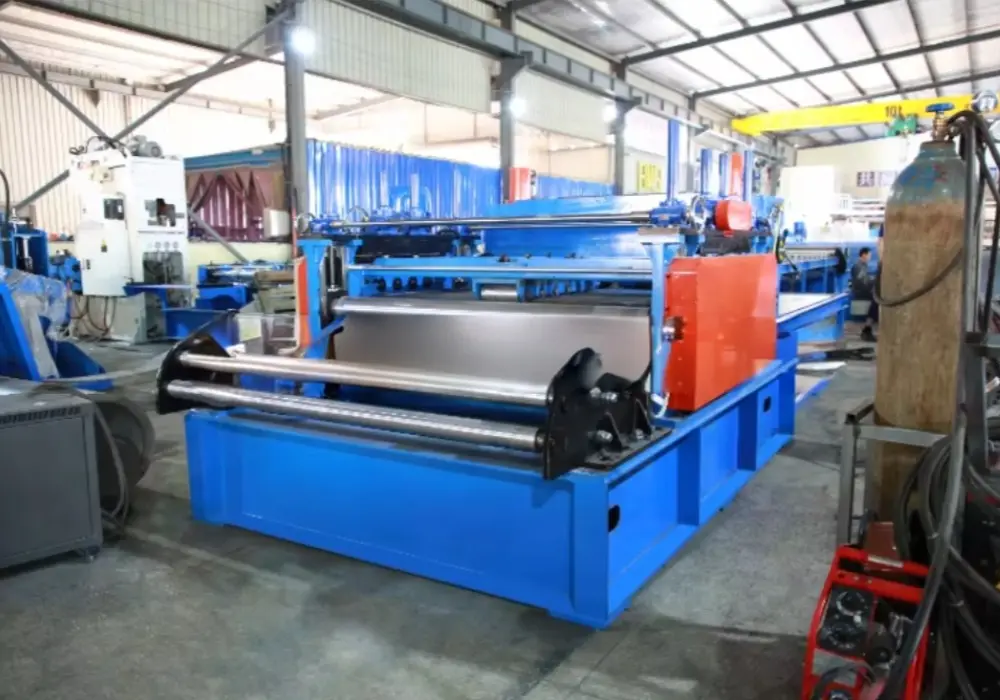
Robust Coil Tipper for Safe & Efficient Steel Handling

Get a Free Quote

Our representative will contact you soon.
Email
Name
Company Name
Message
0/1000
Coil Tipper: The Essential First Step for Safe and Productive Metal Processing

Coil Tipper: The Essential First Step for Safe and Productive Metal Processing

At the heart of every efficient metal processing operation lies a simple yet critical question: how do you safely and reliably move a multi-ton steel coil from its transport position to the production line? The coil tipper is the definitive answer. This robust piece of equipment is engineered to perform the fundamental task of gripping, lifting, and rotating heavy coils from a horizontal to a vertical orientation, preparing them for feeding into cut-to-length lines, slitters, or roll formers. For plant managers and workshop owners, integrating a dedicated coil tipper is a direct investment in foundational safety and workflow optimization. It eliminates the severe hazards and inefficiencies of manual crane handling, prevents costly damage to valuable coil stock, and dramatically speeds up the material feeding process.
Get A Quote

Core Strengths: Why a Dedicated Coil Tipper is a Smart Investment

Implementing a professional coil tipper delivers a powerful array of benefits that directly address the pain points of heavy material logistics. This equipment transforms a manual, variable, and risky operation into a standardized, machine-controlled process. The advantages are immediate and tangible, leading to a safer workplace, faster production cycles, and significant cost savings. By providing a reliable and repeatable method for handling coils, the tipper becomes a cornerstone of a modern, efficient, and responsible manufacturing environment, protecting your people, your assets, and your productivity from the very first step.

Engineered Safety and Hazard Elimination

The primary benefit is the creation of a vastly safer work area. The coil tipper performs all heavy lifting via controlled hydraulic power, completely removing personnel from the danger zone of unstable, swinging loads. This eliminates the risks of crushing injuries, coil roll-aways, and muscle strains associated with chains, slings, and manual crane operation, ensuring compliance with stringent industrial safety standards.

Maximized Operational Efficiency and Throughput

Accelerate your entire production tempo. A coil tipper can accurately position a heavy coil in minutes—a task that can take significantly longer with manual rigging and spotting. This rapid, consistent cycle minimizes the idle time of your downstream processing equipment, allowing your valuable cut-to-length or roll forming lines to start faster and maintain optimal run rates, thereby increasing overall plant output.

Superior Protection for Valuable Materials and Equipment

Safeguard your capital investments. Improper handling is a leading cause of costly edge damage and coil deformation. Our tipper uses a balanced, controlled motion and secure core gripping to maintain perfect coil integrity during rotation. This precision handling preserves the condition of expensive steel stock and prevents misalignment that can cause wear and tear on payoff reel bearings and other downstream machinery.

Robust, Low-Maintenance Design for Continuous Duty

Built for endurance in demanding industrial settings, the machine features a heavy-duty steel frame, industrial-grade hydraulics, and components selected for longevity. This robust construction ensures reliable performance shift after shift, with a focus on ease of service. The emphasis on durability translates to a lower total cost of ownership, higher machine availability, and a dependable return on your investment.

Our Range of Heavy-Duty Coil Tipping Solutions

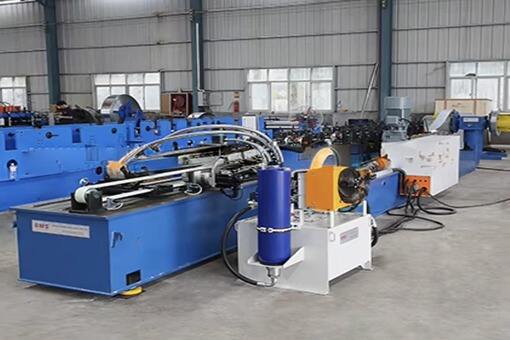
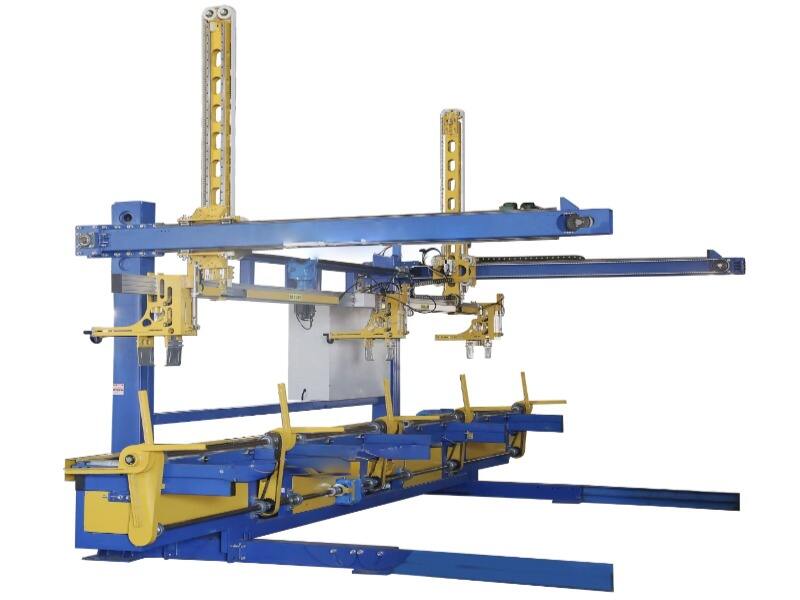
Our product line includes robust coil tipper models engineered to serve as the critical first link in any metal processing workflow. These powerful units are built to handle the substantial weights and dimensions standard in the industry, with customizable capacities to match your specific coil tonnage and size. At the core is a rigid, welded steel base that guarantees stability under full load, integrated with a high-performance hydraulic system for smooth and powerful lifting and rotation. Designed for seamless integration, they can be configured with various mandrel or arm styles to suit different coil core diameters. As essential coil handling equipment, they deliver the reliable, efficient, and safe transfer needed to keep modern processing lines consistently fed.

The initial handling of steel coils is a pivotal operation that sets the tone for safety, efficiency, and cost control throughout the entire manufacturing cycle. A dedicated coil tipper represents the engineered solution to this universal industrial challenge, functioning as the essential bridge between static inventory and active production. For production superintendents and business owners, investing in this technology is a strategic decision with direct implications for operational metrics. It replaces a manual, skill-dependent, and hazardous process—often reliant on multiple crane operators—with a standardized, mechanized, and perfectly repeatable procedure. This shift is vital for any facility aiming to scale production predictably, foster a proactive safety culture, and protect the substantial capital tied up in both raw materials and sophisticated processing machinery.

The application scope for a professional coil tipper is vast and integral to numerous industries. In high-volume metal service centers and distribution yards, this equipment is indispensable for rapidly and safely unloading incoming trucks and accurately transferring coils onto payoff reels, managing the relentless daily flow of material. Manufacturers of construction products and building systems, such as roofing, cladding, and structural components, depend on it to efficiently feed wide, heavy coils into powerful roll-forming lines, where a steady, undamaged material supply is crucial. The automotive supply chain, appliance manufacturing, and plate processing sectors utilize these robust tippers to handle coils for stamped or blanked parts where surface quality is critical. Furthermore, for facilities operating modern, automated processing lines, the coil tipper becomes the indispensable first module in creating a continuous, streamlined workflow. This integration minimizes manual handling points, reduces labor intensity, and creates a cohesive "dock-to-line" process that dramatically boosts overall plant throughput and equipment effectiveness.

Our expertise in providing this fundamental solution is grounded in a long-standing commitment to manufacturing excellence and a global perspective. As part of an established industrial group with over 25 years of specialized experience in designing and building metal processing systems, our engineering is informed by practical, real-world application needs. This extensive background provides an intrinsic understanding of the forces, cycles, and integration requirements necessary for reliable material handling. Our dedication to quality and safety is further validated by adherence to recognized international machinery standards, providing our worldwide clientele with the assurance required for critical equipment.

Choosing our company as your partner for a coil tipper provides several distinct advantages. First, you gain from direct engineering and manufacturing value. We engage with your specific operational layout and coil specifications to configure an optimal solution. By controlling production within our own facilities, we ensure high build quality and component reliability while offering the cost efficiency of a direct source. Second, we provide proven expertise in system integration. Our experience ensures the tipper works in harmony with your material transport and processing equipment for a smooth, efficient workflow. Finally, our established global support network ensures long-term reliability. We provide comprehensive documentation, responsive technical support, and efficient access to genuine parts, ensuring your equipment delivers maximum uptime and protects your operational continuity.

Key Questions for Implementing a Coil Tipper

Integrating this major equipment requires clear information. We address common inquiries from plant managers and engineers.

What are the main specifications we need to define when ordering a coil tipper?

The most critical specifications relate directly to your coil characteristics. You must define the Maximum Coil Weight (in tons or kilograms) and the key Coil Dimensions: including Outer Diameter (O.D.), Width, and, most importantly, the Inner Diameter (I.D.) of the coil core, as the machine's gripping mechanism must be sized to fit it. Additionally, consider the required rotation arc (typically 90 degrees) and the lift height needed to align with your downstream equipment's infeed. Providing these details allows for a safe and accurate machine configuration that meets your operational needs.
Integration is a key design focus. Physically, the coil tipper is positioned to receive coils from a transfer car or crane and then place them onto a payoff reel or feed table. Control integration can range from simple, standalone pendant operation to full PLC integration. For automated lines, the tipper can be equipped with standard industrial input/output (I/O) signals to communicate with the main line controller, allowing it to be part of an automated sequence—for instance, receiving a "ready for coil" signal from the decoiler. This enables a synchronized and efficient process flow.
To ensure years of dependable service, a routine preventive maintenance schedule is recommended. Primary tasks include: Hydraulic System Care: Regularly checking fluid levels and quality, inspecting hoses and fittings, and replacing filters. Mechanical Inspection: Lubricating all pivot points, bearings, and inspecting for wear on structural components and grippers. Electrical & Safety Checks: Verifying the function of limit switches, emergency stops, and other safety devices. We provide a comprehensive maintenance manual and can advise on a schedule tailored to your usage to maximize equipment lifespan and uptime.

Related Articles

What is a Roll Forming Machine?

26

Dec

What is a Roll Forming Machine?

View More
 The Role of Roll Forming Machinery in the Energy Sector

26

Dec

The Role of Roll Forming Machinery in the Energy Sector

View More
Purlin Roll Forming Machines Overview

26

Dec

Purlin Roll Forming Machines Overview

View More

Industry Feedback on Safety and Efficiency Gains

Hear from professionals who have integrated our coil tipper into their operations.
Michael Andersen

“Manual coil handling with overhead cranes was our number one safety risk. Since installing this coil tipper, the process is completely contained and controlled. Our team operates with confidence, and we’ve eliminated a major hazard. The efficiency gain was an added bonus—we’re feeding our line much faster now.”

Sofia Rossi

“In our fast-paced service center, downtime is not an option. This tipper has been incredibly reliable, handling dozens of coils every day. It's fast, strong, and positions coils perfectly every time. It’s the reliable first step that the rest of our process depends on.”

Arjun Mehta

“We compared several suppliers and were impressed by the solid construction and sensible design of this tipper. The installation was straightforward, and the training was clear. The manufacturer's support has been responsive whenever we've had questions. It’s a well-made piece of coil handling equipment.”

Get a Free Quote

Our representative will contact you soon.
Email
Name
Company Name
Message
0/1000
ico
weixin